Disclosure: Some links are affiliate links. Purchases may earn us a commission at no extra cost to you. As an Amazon Associate, The Tactical Mag earns from qualifying purchases.
A 14500 battery can look almost identical to an AA and still be the wrong battery for your flashlight. The important difference is electrical: a conventional rechargeable 14500 lithium-ion cell is usually labelled 3.6V or 3.7V, while an alkaline AA is nominally 1.5V and a NiMH rechargeable AA is 1.2V.
Use a conventional 14500 only when the exact flashlight explicitly supports it. A battery fitting inside the tube is not enough. An unsupported higher-voltage cell can damage an AA-only light.
That distinction matters when choosing between the lights in our AA flashlight guide. Some accept ordinary AAs only; others are designed to use both AA and 14500 power.
AA vs 14500: read the voltage and chemistry
AA describes a familiar battery format. It does not tell you that every rechargeable or lithium-labelled battery in that shape is interchangeable. Read the label on the cell and the battery section of the flashlight manual together.
| Battery label | Typical nominal voltage | Rechargeable? | Compatibility check |
|---|---|---|---|
| Alkaline AA | 1.5V | Ordinary alkaline cells: no | The light must accept alkaline AA batteries. |
| NiMH AA | 1.2V | Yes, with a compatible NiMH charger | Check that the light supports NiMH, not just a physical AA size. |
| Primary lithium AA | 1.5V | No | Check the manual for this chemistry. It is different from a rechargeable 14500. |
| Conventional lithium-ion 14500 | Usually 3.6V or 3.7V | Yes, using the specified charging method | The light must explicitly support the cell type and voltage. |
| Regulated rechargeable 1.5V lithium AA | 1.5V output | Yes, using the battery maker’s specified method | Check both device compatibility and charging requirements. Do not treat it as a conventional 3.7V cell. |
These are nominal values, not a promise that voltage stays unchanged throughout discharge. Energizer’s NiMH AA data sheet and primary lithium AA data sheet illustrate why the chemistry matters as much as the size.
Two flashlights, two different battery plans
The following examples are useful because they solve different problems. They are not evidence that every Fenix or Acebeam model uses the same batteries.
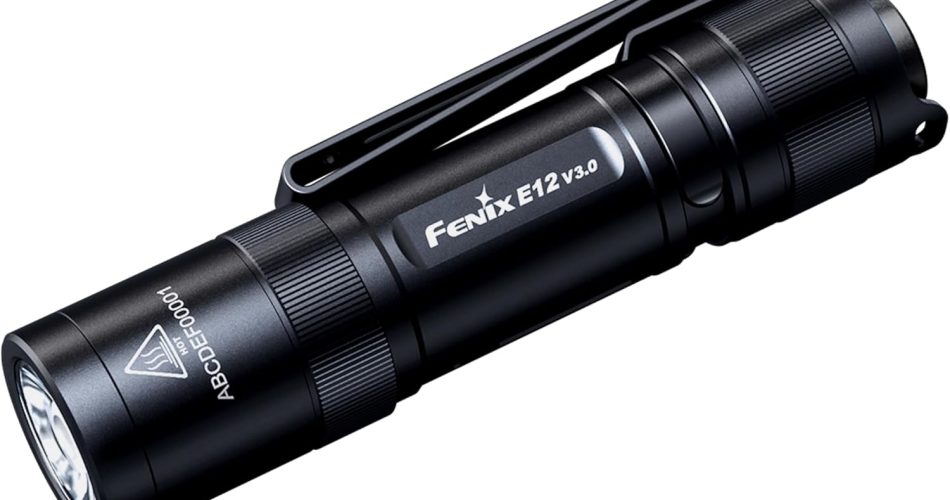
Fenix E12 V3.0: keep the battery plan simple
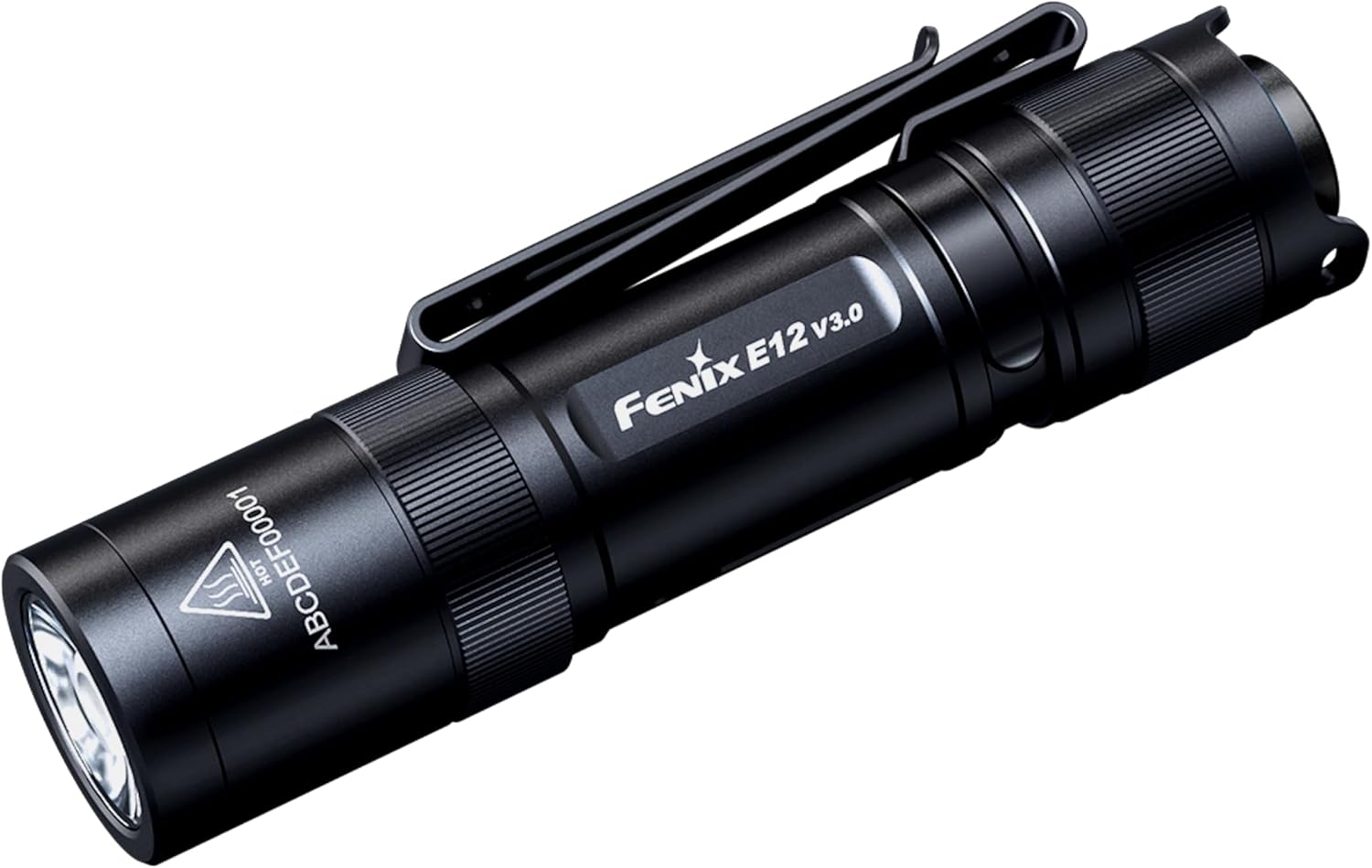
The E12 V3.0 suits someone who wants a pocket light built around ordinary AA supplies. Fenix recommends alkaline AA or rechargeable NiMH AA batteries. Its published operating-voltage range is far below a conventional 3.7V 14500, so that cell is not a brightness upgrade for this light.
Its magnetic tail and two-way clip are useful for close jobs when your hands are occupied. The limitation is the battery system: there is no charging port on the light, and buying a higher-voltage cell does not turn it into a rechargeable dual-fuel model. Choose it if sharing AA supplies with other equipment matters more than chasing a larger output figure. Check the E12 V3.0 instructions and compatibility information before trying a less familiar battery type.
Acebeam Pokelit AA: flexibility, with a cell to keep track of
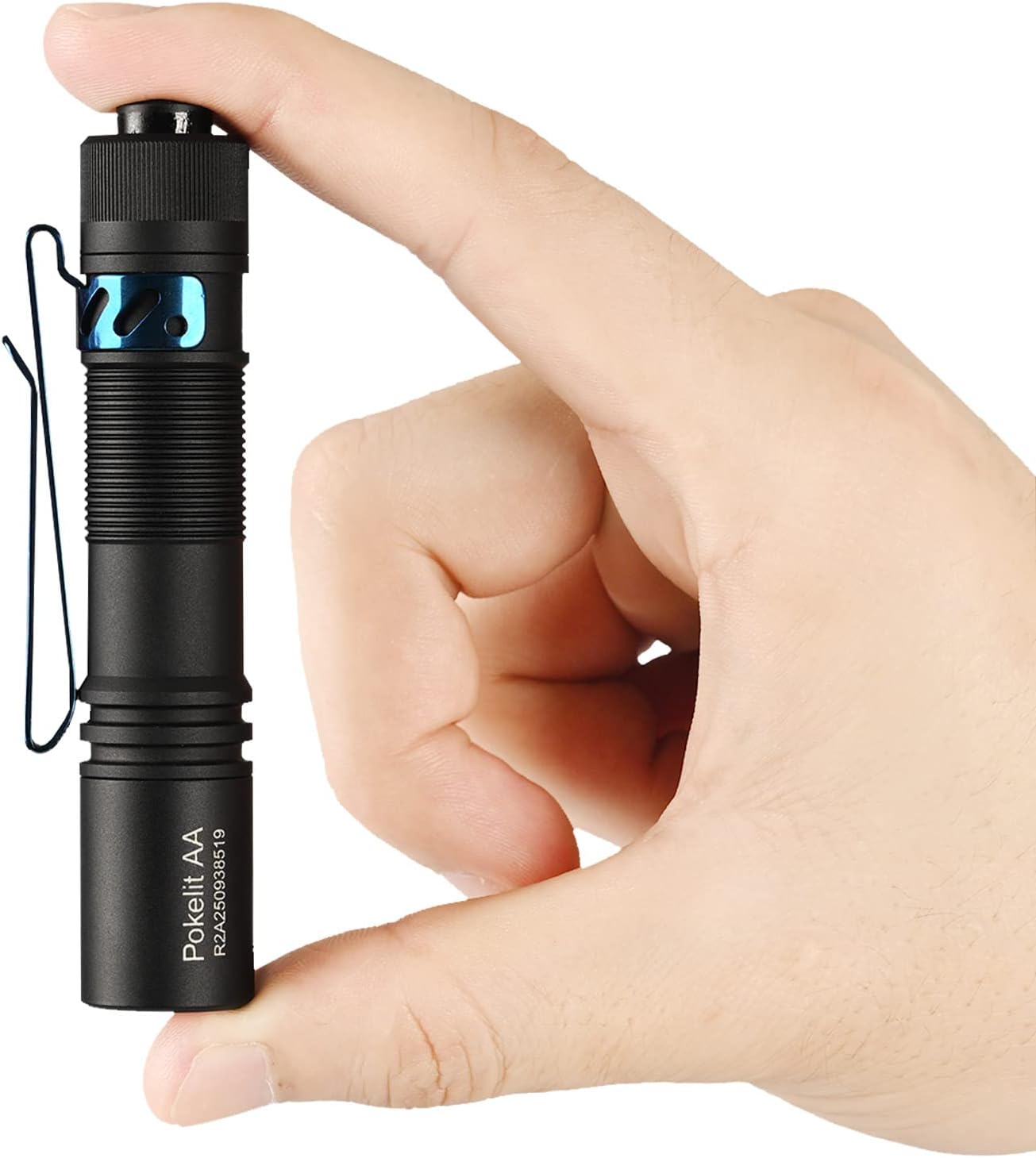
The standard high-CRI Pokelit AA accepts its specified rechargeable 14500 as well as alkaline or NiMH AA batteries. That is useful if you want rechargeable daily use with an ordinary-AA fallback. The included battery has its own USB-C charging port; the flashlight body does not.
The compromise is that the two power options do not give identical performance. ZeroAir’s instrumented review found lower output with NiMH than with the included lithium-ion cell, and criticised the stiff switch and mode memory. Its orange high-CRI sample belongs to the same standard emitter family, not the higher-output gray variant. Choose the Pokelit for battery flexibility and its high-CRI beam; choose the Fenix if you prefer to avoid managing a separate 14500 supply. Follow Acebeam’s model-specific battery guidance.
View the standard Pokelit AA on Amazon
A rechargeable 1.5V AA is a separate category
Some lithium-based rechargeable AAs regulate their output to 1.5V. Their label may say lithium-ion, but their output and charging requirements differ from an ordinary 3.7V 14500. The presence of the word lithium is not a compatibility decision.
XTAR’s guidance for its rechargeable 1.5V AAs specifies compatible charging equipment and notes that current limits can affect device suitability. Do not assume that a charger supporting AA-sized NiMH or 14500 cells also supports these regulated batteries. Check the exact cell and charger combination.
If your light’s documentation is unclear, use the battery types it explicitly recommends or ask the manufacturer about the proposed replacement. Guessing from a marketplace title is unnecessary when the wrong choice can damage the light.
Why the same flashlight can behave differently on AA
A dual-fuel light is designed to operate across more than one battery type. That does not mean its highest output, mode spacing or runtime stays the same on each type. Compare the manufacturer’s performance information for the battery you intend to carry.
It is also misleading to compare two cells by mAh alone when their voltages differ. Watt-hours account for both voltage and charge capacity, but even that figure is not a complete flashlight runtime prediction. Driver behavior, the selected mode and the point at which the light reduces output or shuts down all matter.
For camping, plan around the output you will actually use, rather than assuming a headline maximum lasts all evening. Our guide to camping lumens and runtime explains that distinction.
Pack and charge the battery you actually bought
- Use the correct charging method. Follow the exact cell’s instructions, including whether charging takes place in a separate charger or through a port on the battery.
- Keep spare contacts protected. Use a battery case or the original packaging rather than leaving cells loose with keys, coins or metal tools.
- Do not recharge a primary battery. Ordinary alkaline and primary lithium AAs are not rechargeable substitutes.
- Keep different supplies identifiable. A labelled case makes it easier to distinguish ordinary AAs from 14500 cells when packing in poor light.
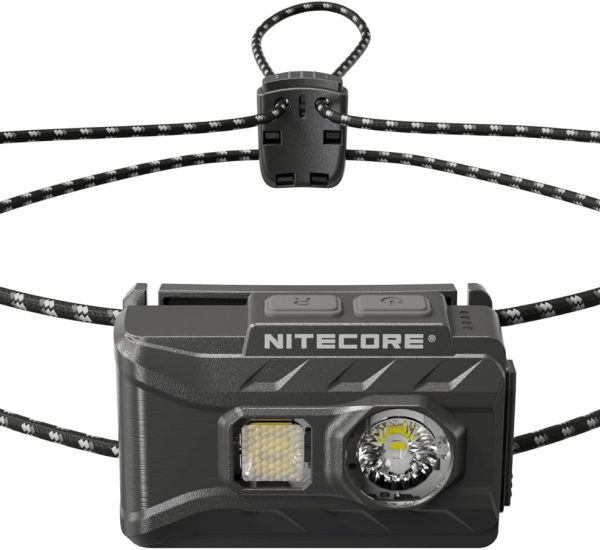
These points follow Energizer’s battery-care guidance. If you carry both a headlamp and a handheld, list their battery requirements separately in your day-bag checklist; a spare for one may be useless in the other.
The check that matters before buying
Write down the flashlight’s exact model, the permitted battery chemistry and voltage, and the required charging method. Match all three before ordering a replacement. If you want AA and 14500 flexibility, buy a light designed for it. If you already own an AA-only model, stay within its instructions.
For a shortlist built around those different approaches, compare our AA flashlight recommendations. If you are still deciding what form of light to carry, start with headlamp versus flashlight.