A small AA flashlight earns its place by being easy to carry and easy to power. It should help you find a dropped part, inspect a bag or walk back from camp without turning battery management into another hobby.
Choose the Fenix E12 V3.0 for straightforward AA operation, or the standard high-CRI Acebeam Pokelit AA if you want rechargeable everyday use with AA backup. They serve different needs. The Fenix keeps the power system simple; the Pokelit offers better color rendering and higher peak output with its included lithium-ion cell.
This article contains affiliate links. If you buy through them, we may earn a commission at no extra cost to you. As an Amazon Associate I earn from qualifying purchases.
Our AA flashlight picks at a glance
| Light | Best fit | Power | Important limitation |
|---|---|---|---|
| Fenix E12 V3.0 | A simple light powered by ordinary AA batteries | AA alkaline or rechargeable NiMH | No charging port; no standard 3.6/3.7V 14500 support |
| Acebeam Pokelit AA, black 550-lumen version | Everyday carry with rechargeable power and AA fallback | Included USB-C rechargeable 14500; also accepts AA alkaline/NiMH | 550-lumen claim applies to 14500 power, not ordinary AA |
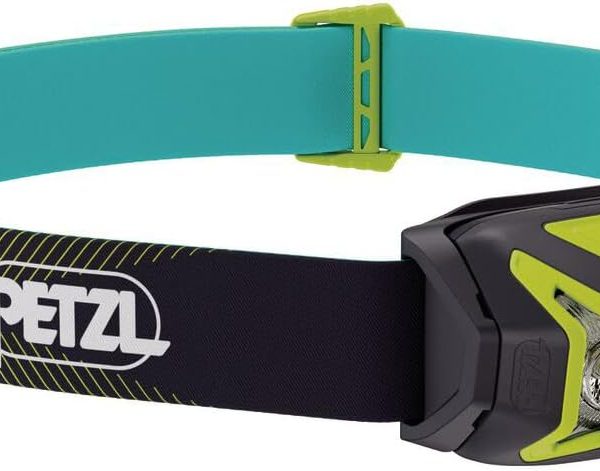
Both are white-light pocket flashlights. Neither replaces a comfortable headlamp for long jobs requiring two hands. Start with the task you need to do, rather than choosing whichever product advertises the larger number.
Fenix E12 V3.0: best for keeping AA power simple
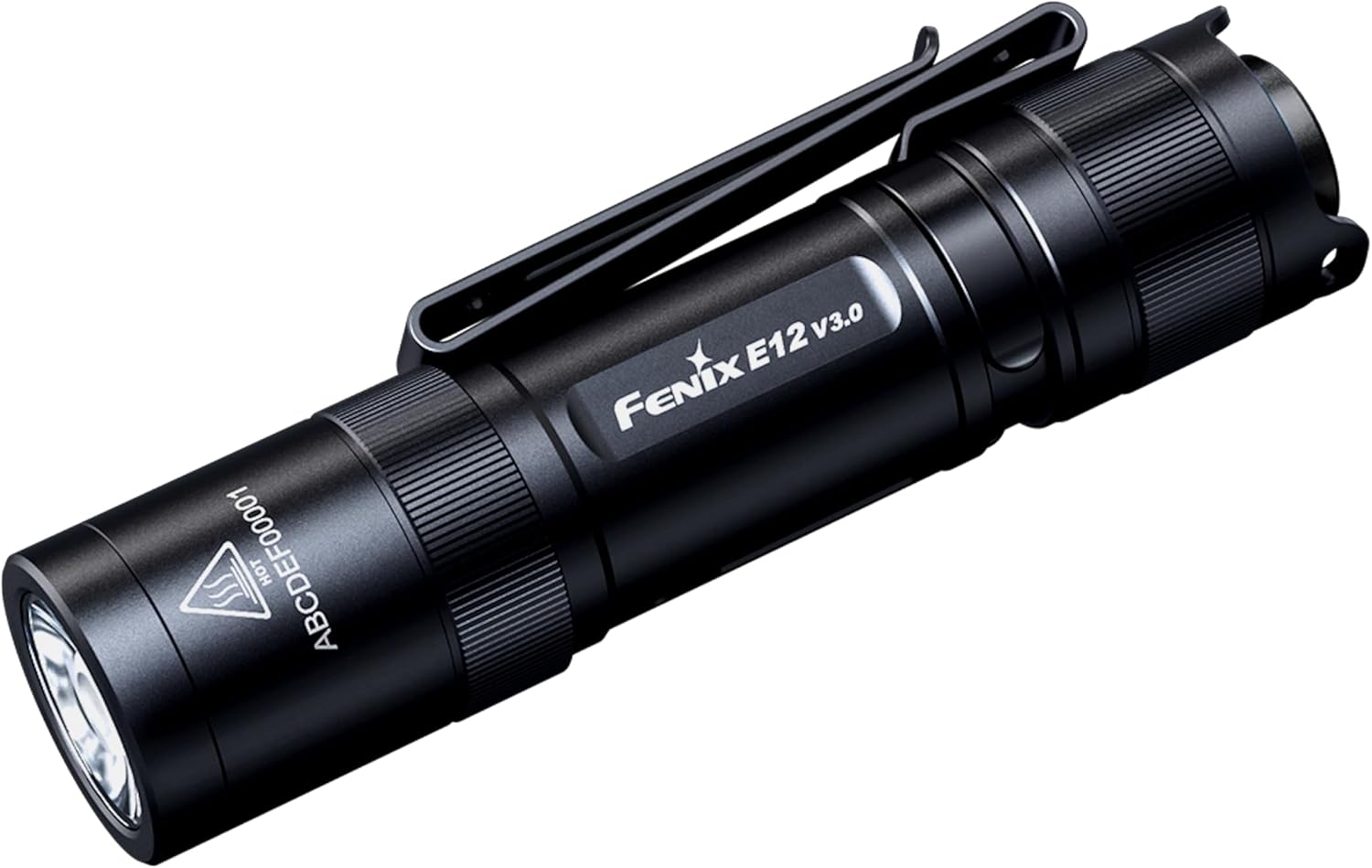
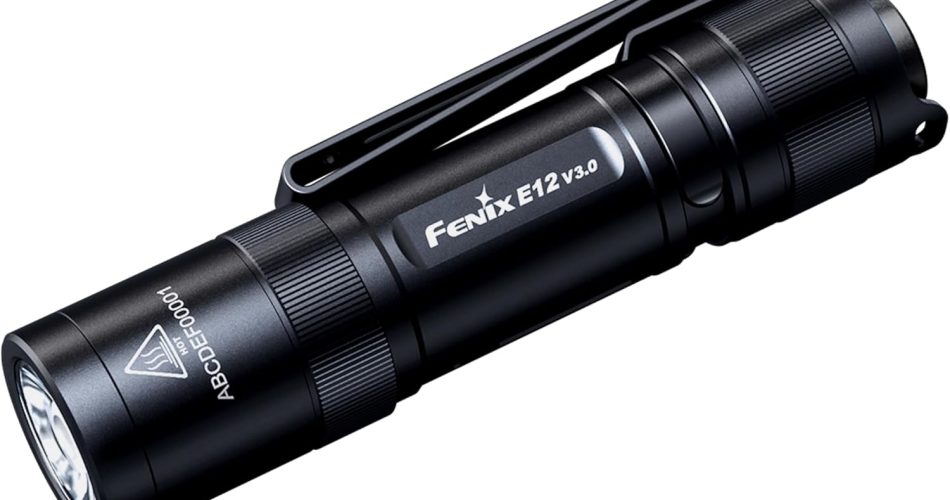
The E12 V3.0 is the better choice if your ideal flashlight takes a familiar battery and stays out of the way. It is only 81.5 mm long, has three brightness levels, and uses a tail switch rather than a menu of special modes. That makes it an appealing bag light or everyday pocket tool for someone who has no interest in maintaining a lithium-ion charging routine.
The magnetic tail and two-way clip add flexibility around a car or campsite. You can attach the base to a suitable steel surface, or clip the light to a cap brim for a short task. Treat the cap option as a convenience, not a replacement for the comfort and adjustment of a proper headband.
Fenix lists 200 lumens, a 78-meter rated beam distance and IP68 protection. These figures make it a nearby-task light, rather than a tool for searching a distant treeline. A beam-distance rating is also not the same as a distance at which you can reliably identify small objects.
The beam is its main compromise. 1Lumen’s instrumented review found a greenish tint and a fairly concentrated beam. If you care about natural-looking colors when inspecting equipment, the Pokelit is the stronger choice. The same review found no low-voltage protection for NiMH, so recharge a depleted cell promptly rather than repeatedly restarting the light.
Mode memory is another preference to settle before buying: it recalls the previously used level. That is convenient for repeated work, but less useful if you always want a predictable low start in a dark tent. Choose the Fenix for compactness and ordinary AA convenience; skip it if USB charging or high color rendering is central to your use.
Compare the delivered price, seller and warranty terms with Fenix direct before ordering. A marketplace offer is not necessarily the best value.
Acebeam Pokelit AA: best for rechargeable use with AA backup
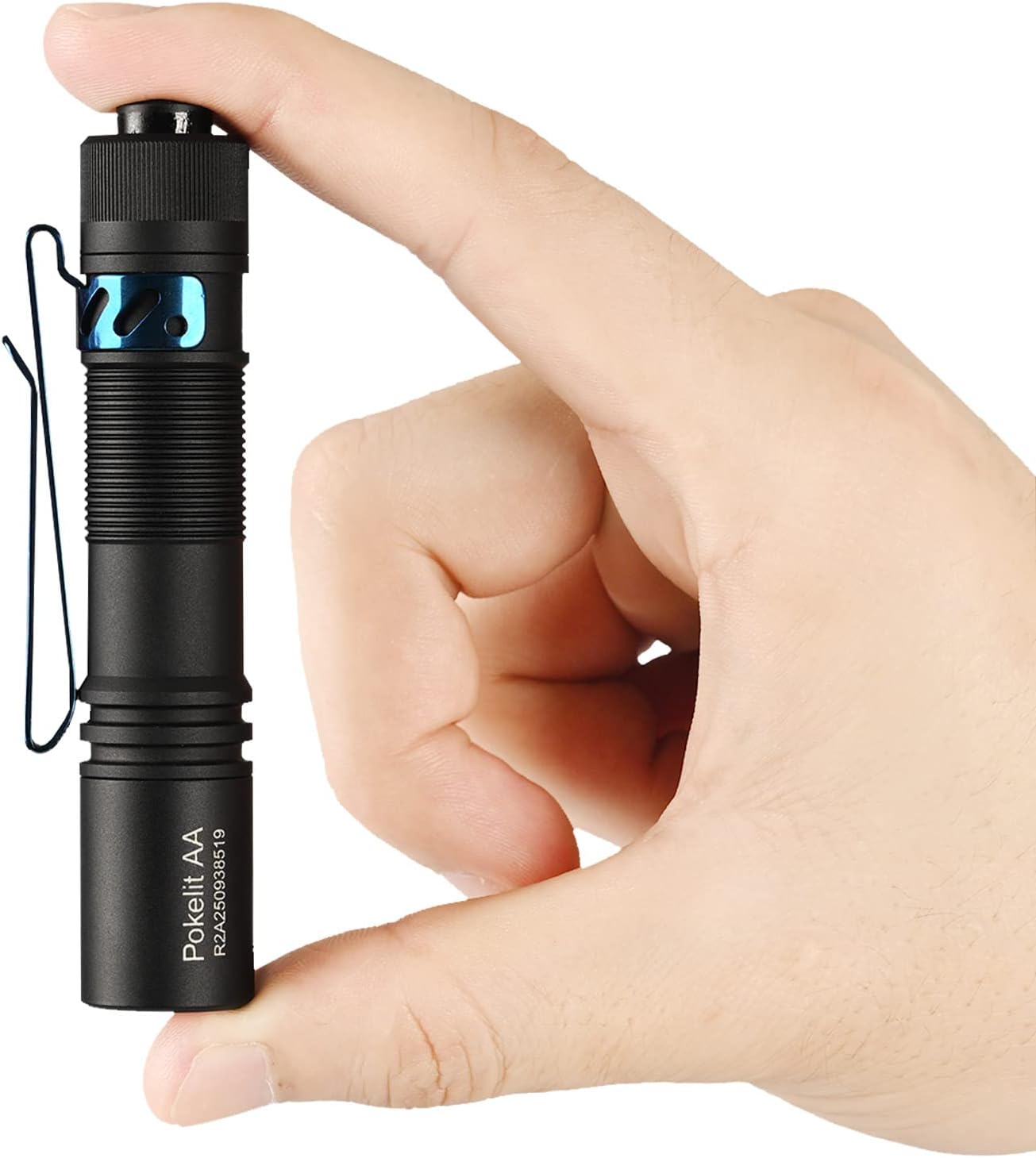
The standard Pokelit AA is a good fit when you want one light for daily pocket carry and occasional camping. Its included 14500 battery has a USB-C charging port on the cell itself. Unscrew the light, remove the battery and plug in the cell to recharge it. If that battery is depleted away from a charger, the light can also run on an ordinary AA alkaline or NiMH cell, with lower output.
Its strongest reason to buy is the light quality. The black version linked here uses a Nichia 219F LED with a nominal 5000K color temperature and a high color-rendering specification. That is useful when distinguishing colored objects matters more than squeezing out a larger turbo number. ZeroAir’s review of the standard high-CRI version measured color rendering consistent with the claim and favored the straightforward interface.
There are two catches. First, maximum output is brief; this is not a 550-lumen lamp for an entire evening. Second, the tail switch is quite firm, and mode memory can bring the light back on at a brighter level than you wanted. Check the last-used setting before handing it to someone at camp.
Buy the standard high-CRI model for its combination of useful color rendition, rechargeable power and AA flexibility. Skip it if you want a guaranteed low start or prefer never to remove a cell for charging. Do not substitute specifications from the gray 1,000-lumen Pokelit, the copper version or the Pokelit 2AA: those are different variants.
Check the black high-CRI Pokelit AA on Amazon · Manufacturer specifications
AA and 14500 batteries are not interchangeable
They can look similar, but a conventional lithium-ion 14500 cell has a nominal voltage of 3.6 or 3.7 volts. Ordinary AA alkaline and NiMH cells operate at much lower voltages. Only use a 14500 when the exact flashlight explicitly supports it.
Do not put a conventional 3.6/3.7V 14500 into the Fenix E12 V3.0. Fenix recommends AA alkaline or 1.2V NiMH. Some listings mention a regulated 1.5V lithium battery using the 14500 size designation; that is not permission to use a conventional higher-voltage lithium-ion cell. Follow the exact voltage and battery specifications in the manual.
The Pokelit supports both systems, but the brighter lithium-ion performance does not carry over to AA power. For routine AA use, rechargeable NiMH cells let you reuse the battery, provided you have a suitable NiMH charger. Neither of these flashlight bodies charges an ordinary NiMH cell internally.
For a battery-type comparison and a step-by-step compatibility check, read AA vs 14500 flashlight batteries before ordering replacement cells.
What matters more than the maximum lumen figure?
A useful beam. More lumens do not automatically mean a clearer view of the thing you are inspecting. A tight hotspot can help at a distance but be less comfortable when spread across the inside of a bag. Color rendering and beam width deserve attention alongside output.
A setting you can live with. A lower level is often more comfortable around reflective surfaces or in a tent. Both picks have mode memory, so neither guarantees that every switch-on begins at its lowest setting.
Output over time. Peak brightness and maximum runtime usually describe different operating conditions. Look at a runtime graph, as REI’s flashlight guide recommends, rather than assuming a turbo figure lasts until the battery empties.
Access when you need it. Keep your light where you can find it by touch. A pocket clip or a consistent small compartment in your airsoft day bag is more useful than leaving it loose beneath spare gear. Store spare cells in a protective battery case, not against loose metal objects.
Which one should you buy?
Get the Fenix if ordinary AA batteries and a short, uncomplicated light are your priorities. Get the Pokelit if you want rechargeable everyday use and place more value on natural-looking colors. If you expect to cook, repair equipment or work with both hands for long periods, put a headlamp ahead of either flashlight on your shopping list.
For hands-free camp use, compare our red-light headlamp picks. The headlamp vs flashlight guide can help you decide whether carrying both makes sense.