Disclosure: Some links are affiliate links. Purchases may earn us a commission at no extra cost to you. As an Amazon Associate, The Tactical Mag earns from qualifying purchases.
For ordinary campsite chores, a headlamp in the 300-400-lumen class is a sensible starting point, provided it has a comfortable low mode and a useful beam. You will usually spend more time using those lower settings than the maximum. Reading a label, cooking and walking around a campsite are different jobs from looking far along a trail.
That range is a buying starting point, not a universal minimum or a safety threshold. A lower-output light can handle close tasks well; a higher-output model can still be awkward if its beam is too narrow or it is difficult to dim.
Choose the beam, working mode and battery plan together. The biggest lumen number on the box answers only part of the question.
Choose light for the task in front of you
REI’s headlamp buying advice notes that reading and other close work can need 100 lumens or fewer. That is a useful reminder to inspect the low end of a lamp’s range, rather than treating maximum output as its most important setting.
| Task | What to prioritize | What to avoid |
|---|---|---|
| Reading, sorting gear or working inside a tent | A low, even beam that illuminates the whole close task | A bright central hotspot that reflects back from the page or fabric |
| Cooking or repairing equipment | Hands-free placement, controllable white light and clear detail | Assuming red light is suitable for every color-dependent task |
| Walking around camp | Enough ground coverage to see your immediate route | Using a narrow distance beam as the only view of your feet |
| Following a darker or more uneven route | A useful combination of nearby coverage and farther reach | Choosing from lumens alone without checking the beam and usable runtime |
| Checking something briefly at a distance | A focused mode you can use when needed | Budgeting an entire evening around a short boost mode |
The appropriate setting also depends on the surroundings, weather, your vision and the job. Try the actual lamp at home in darkness before deciding which mode you will rely on outdoors.
Lumens, beam pattern and distance are different
Lumens describe total light output. They do not tell you how that light is distributed. A broad beam spreads illumination across a nearby area; a focused beam puts more of it toward a smaller area farther away. Candela describes intensity in a direction, which helps explain why two lights with similar lumen figures can have different reach.
Petzl’s beam-pattern guidance distinguishes wide light for proximity work, mixed beams for movement, and focused beams for looking farther away. For camping, the ability to see comfortably around your hands and feet can matter more than a distant bright spot.
A headlamp puts that light where you turn your head. A handheld lets you aim it independently. If the form of the light is still undecided, our headlamp-versus-flashlight comparison is the place to start.
Why maximum lumens and maximum runtime do not go together
A product may advertise a high output and a long runtime without delivering both at once. The longest runtime often belongs to a much lower mode. Output may also decrease during a run.
For ordinary modes, PLATO’s FL 1 testing guidance describes runtime ending when output reaches 10% of the initial reference value. A runtime figure under that method is therefore not a guarantee of constant starting brightness. For a hypothetical mode beginning at 300 lumens, 10% would be 30 lumens.
The 2025 standard also defines a separate method for short-duration elevated-brightness modes. Do not assume every older product or every turbo label uses that newer method. Check which standard and mode the manufacturer is describing.
A good runtime graph is often more informative than a single hour figure. Look for the output after the initial peak and how long the light stays useful for your intended task. Keep the battery type and test conditions attached to the result.
Two headlamps that show why the mode table matters
These examples come from our headlamp buying guide. They illustrate different power plans rather than a claim that one lumen figure is the correct answer for every camper.
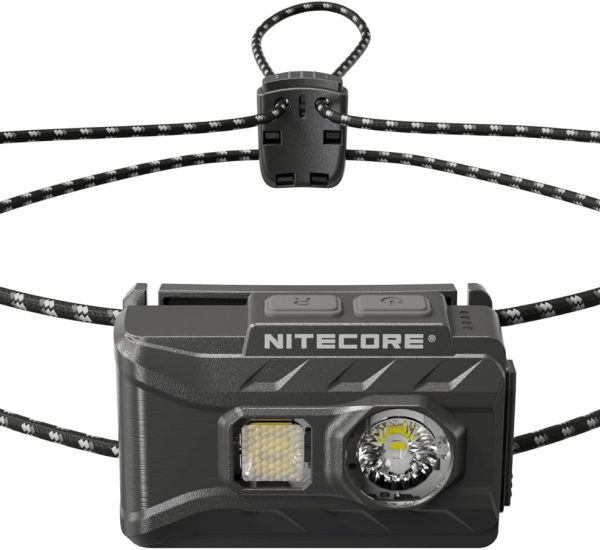
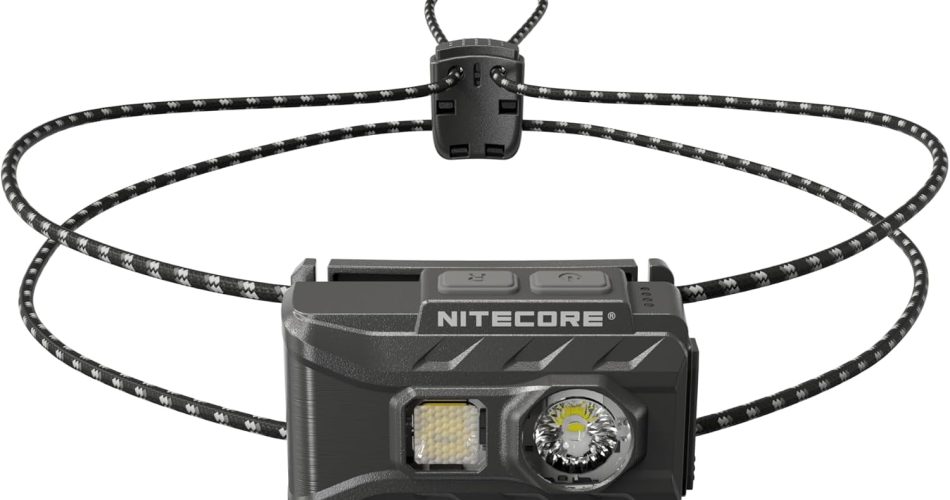
Nitecore NU20 Classic: a light camp setup with a charging plan
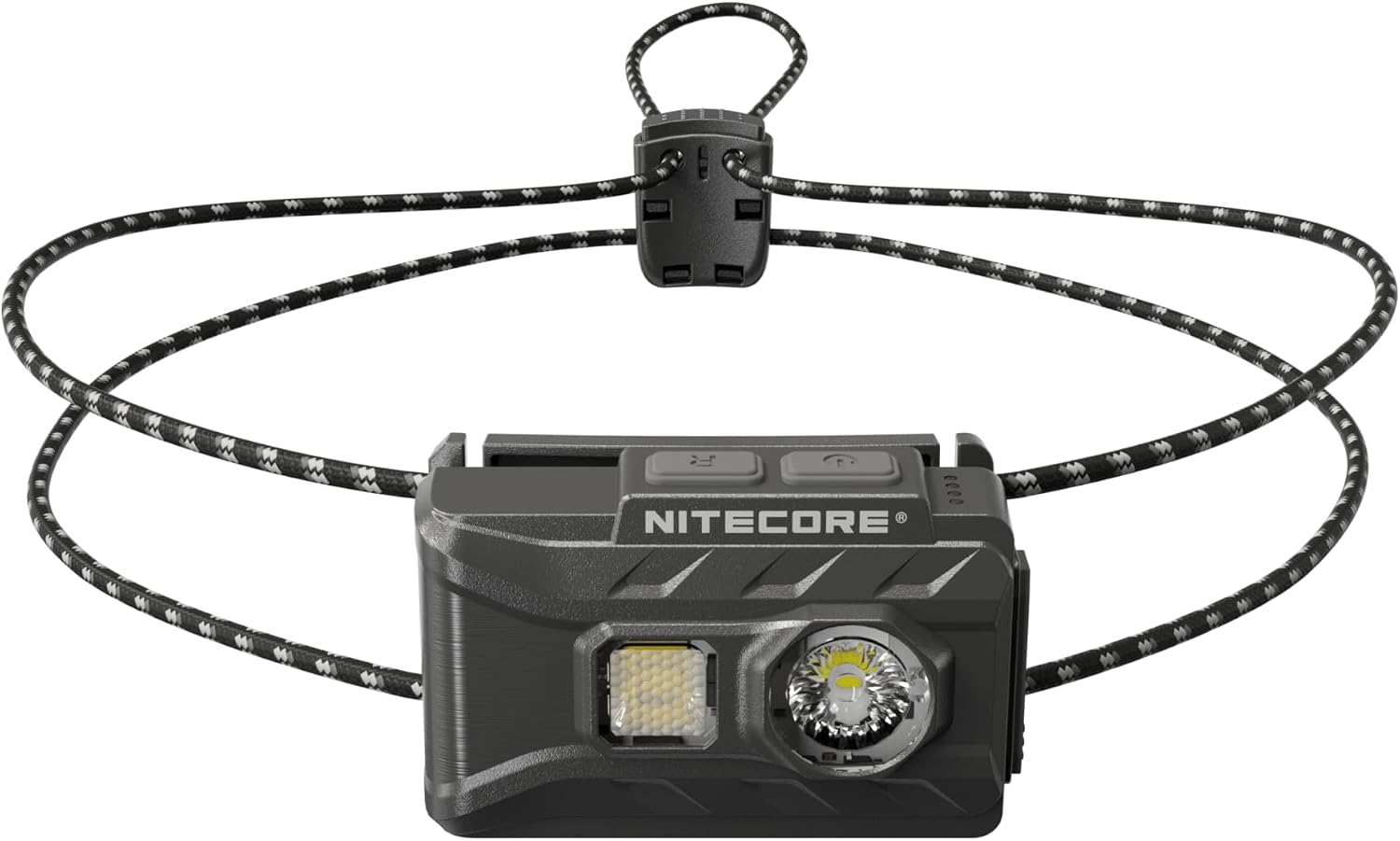
The NU20 Classic suits someone who values low carrying weight and USB-C charging. Nitecore lists 38 grams including the bracket and headband, a 360-lumen maximum and a separate high-CRI auxiliary white light. That gives you more to consider than a single bright main beam when sorting close-up equipment.
The limit is its integrated battery: you need a charging plan rather than a pocketful of replacement AAs. Nitecore’s 97-hour maximum is for its 1-lumen ultralow setting, not 360 lumens. Choose it for a small rechargeable camp light; skip it if swapping ordinary batteries is central to your trip. Check the NU20 Classic mode and power information, not specifications for the original NU20 or a NU25.
View the NU20 Classic on Amazon
Petzl ACTIK CORE 625: more power-source flexibility
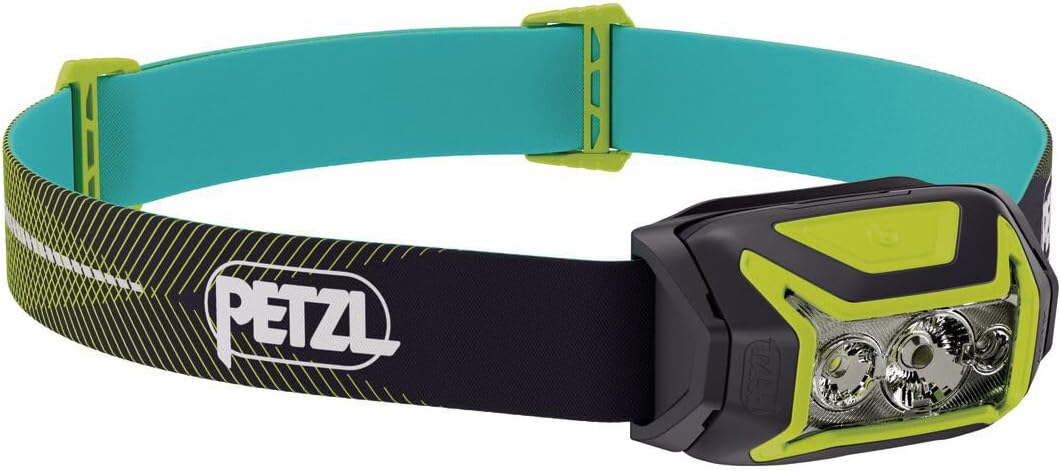
The ACTIK CORE is useful if you want the supplied rechargeable CORE battery with a three-AAA alternative. Its wide and mixed beams suit different tasks, and the lower modes matter more around camp than using maximum power constantly. The trade-off is carrying a larger power system than the compact Nitecore.
Petzl’s current CORE-powered table lists 7 lumens for 100 hours, 100 lumens for 7 hours, and a 625-lumen maximum-power mode for 2 hours. Those are manufacturer FL 1 figures, not promises of flat output throughout. The AAA maximum is different. Choose it for power-source flexibility and extra output when needed; a lighter model may suit you better if charging is easy and a modest camp light is enough.
Petzl’s full mode table is more useful than combining its largest output and longest runtime into one imaginary setting.
Red light is an option, not the answer to every task
Low red light can be useful when you want less disruptive lighting around camp. White light is often more useful when you need to distinguish colors or inspect equipment. Do not make a cooking or repair task harder just to stay in a red mode.
Use the lowest setting that lets you do the job comfortably and point the beam away from other people. At an airsoft event, lighting and identification rules still come from the organizer; a red mode is not permission to ignore them.
Plan the evening instead of guessing from the box
Write down the jobs you expect: setting up camp, cooking, walking and finding equipment after dark. Identify the modes you would use for those jobs. Then check their output and runtime information using the battery you will actually carry.
Keep a sensible reserve for delays and unexpected use rather than planning to exhaust the battery exactly on schedule. Lock or pack the lamp as its instructions recommend so it does not switch on inside the bag. Put charging cables or permitted spare cells in your packing checklist.
If your backup uses AA batteries, read AA versus 14500 compatibility before assuming the same spare works in every light. For specific models, compare our headlamp recommendations and AA flashlight guide.