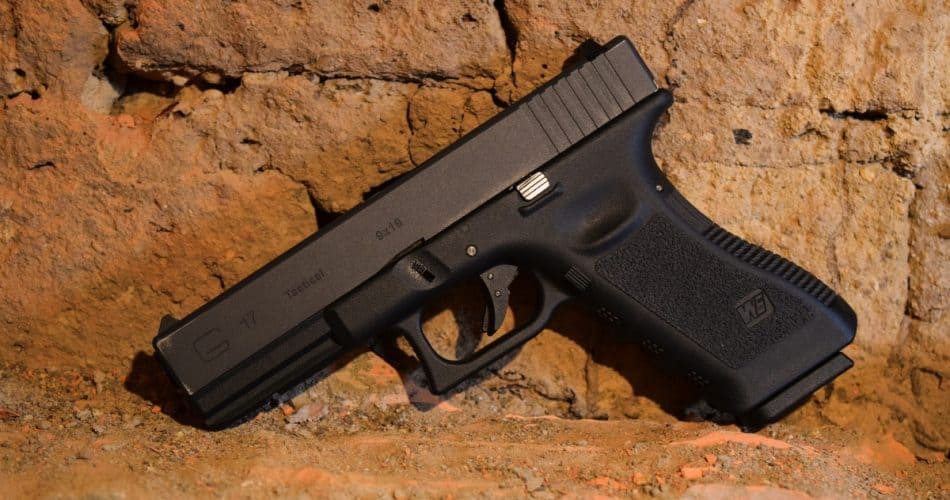
You do not automatically need an airsoft sidearm because you own a rifle. For a new player using a field-approved AEG, it can usually wait unless the rules or the way you play give it a clear job. A sniper or DMR role may be different: your primary may have a minimum engagement distance, and the organizer may require an approved secondary.
A pistol can also be a purchase you make simply because you enjoy using one. That is a perfectly good reason. It is more useful to recognize it as a choice than to build a starter budget around a supposedly essential backup that may spend every game in its holster.
Some links are affiliate links. We may earn a commission at no extra cost to you. As an Amazon Associate, The Tactical Mag earns from qualifying purchases.
When an airsoft sidearm makes sense
| Your situation | How useful is a sidearm? | Check first |
|---|---|---|
| First games with a suitable AEG | Usually optional. Prioritize a complete, reliable first setup. | Does the field or event require one for your role? |
| Sniper or DMR with a minimum engagement distance | May be needed or explicitly required for closer engagements. | Which secondary types are permitted, and what limits apply to them? |
| Games with designated pistol-only areas or rounds | Useful if you want to take part in that format. | The actual definition of an allowed pistol and firing mode. |
| A recurring handling problem with your primary | Potentially useful, but try a borrowed setup before buying. | Whether the extra gun and carrying gear solve the problem. |
| A backup for a broken primary | Can keep you participating, within its limits. | Whether your real problem is ammunition, power or an unresolved fault. |
| You enjoy pistol play | A valid preference, even without a strict need. | The complete cost and a secure, compatible carrying setup. |
Ask the field before making a sniper or DMR loadout
MED means minimum engagement distance: the closest distance at which that class of replica may be used under the field’s rules. It is a restriction, not the gun’s maximum useful range.
Parker’s Airsoft Field provides a useful example of why role matters. Its rules specify a secondary for sniper and DMR classes when engaging inside their respective minimum distances, while its rifleman class has no MED. Those are that field’s classifications, not a national standard.
Definitions also differ between organizers. The Evike Airsoft Camp ruleset specifies that a sniper’s secondary must be a pistol rather than a full-size AEG. Buying a compact rifle as a “backup” would not satisfy that particular rule. Check the current event instructions, not just a general article about the role.
A pistol does not automatically have lower power or permission to fire at any distance. Have it checked under the applicable rules. If you cannot make a permitted shot, do not use a restricted primary inside its MED; follow the site’s disengagement or other stated procedure. Our guide to choosing the sniper role covers the broader commitment.
If you use an AEG, fix the ordinary problems first
If you keep running out of ammunition, start by reviewing magazine capacity, feeding and how much you carry within the field’s limits. If the battery runs flat, check its condition and your power plan. If the gun is unreliable, resolve the fault. A sidearm does not fix any of those problems; it gives you a second, different system to manage.
For a first purchase, compare that extra system with the items still missing from your main kit. Better-fitting approved protection, suitable magazines or a compatible spare battery may solve a more immediate problem. Our first airsoft budget guide sets out those costs, while the beginner gun guide covers primary options.
It is also worth distinguishing a carried sidearm from a spare primary stored where the field permits. The first is an in-game option; the second can help you continue the day after a fault. Neither is compulsory equipment at every ordinary skirmish.
Player experiences differ for a reason
In this Airsoft Forums UK discussion, some players describe using pistols in confined spaces or with a DMR. Others prefer a lighter setup and use their primary most of the time. One contributor also describes losing equipment from an unsuitable holster.
A Dutch discussion about a first airsoft purchase includes a player who reports spending the first year without a sidearm and recommends starting with an AEG. That is an individual experience, not proof that every beginner should make the same purchase.
The useful question is what happens in your games. After a few visits, note when you could have used a permitted secondary and when you merely liked the idea of one. Borrowing or renting a suitable pistol, where available, can help separate the two.
Budget for the holster and magazines, not just the pistol
The advertised gun price is only the start. Check the cost and availability of compatible magazines, the specified gas or power supply, a loader where needed, maintenance supplies and a secure carrying setup. You may also need a different pouch for pistol magazines.
For a pistol holster, verify fit for the exact airsoft model, including any light, optic or other attachment. A familiar model name does not prove that the replica has identical dimensions to another manufacturer’s version. Safariland’s holster warnings stress correct fit and configuration. That is general holster guidance, not certification that a particular airsoft replica fits one of its products.
Check that the holster covers the trigger area, retains the replica during normal movement and mounts securely to your equipment. Do that fit check with the replica made safe according to its instructions, in an appropriate area. Do not rely on the gun merely sitting in a loose pouch.
Shopping results for airsoft pistol magazines are only a starting point. Match the manufacturer, platform, generation and power system before ordering. Similar appearance and the same caliber do not establish compatibility.
Choose a power system you are prepared to maintain
A refillable-gas pistol, a CO2 cartridge model and an electric pistol involve different supplies and routines. Use the power source specified for the exact gun and magazine. Do not assume that a compatible-looking CO2 magazine can be substituted for a refillable-gas version.
Temperature also matters for liquefied-gas systems. Tokyo Marui’s operating guidance explains how a cold tank can reduce performance and how firing cools it further. That is a reason to research the exact model under relevant conditions, not a reason to improvise heat or a higher-pressure gas.
Blowback, magazine capacity and feel are separate choices from whether you need a sidearm at all. Once the role and budget are clear, compare the configurations in our airsoft pistol buying guide. It is a better time to compare individual models than before you know what you want the pistol to do.
A practical purchase decision
Wait if you are new, your main setup is incomplete and the field does not require a secondary. Play a few games first.
Plan it as part of the loadout if the role’s rules require one. Include the approved secondary, compatible carrying gear and its running supplies in the initial budget.
Buy it for enjoyment if you like pistol play and can afford the complete setup. You do not need to justify every airsoft purchase as a competitive advantage. Just check that it is allowed, secure and ready to use, and pack its supplies with the rest of your day-game equipment.